Welcome to Visit Dayue Import and Export Guangzhou Co., Ltd.

News
Dayue Import and Export Guangzhou Co., Ltd.
Industrial Sodium Hydroxide Storage and Handling: Key Quality and Safety Control Points
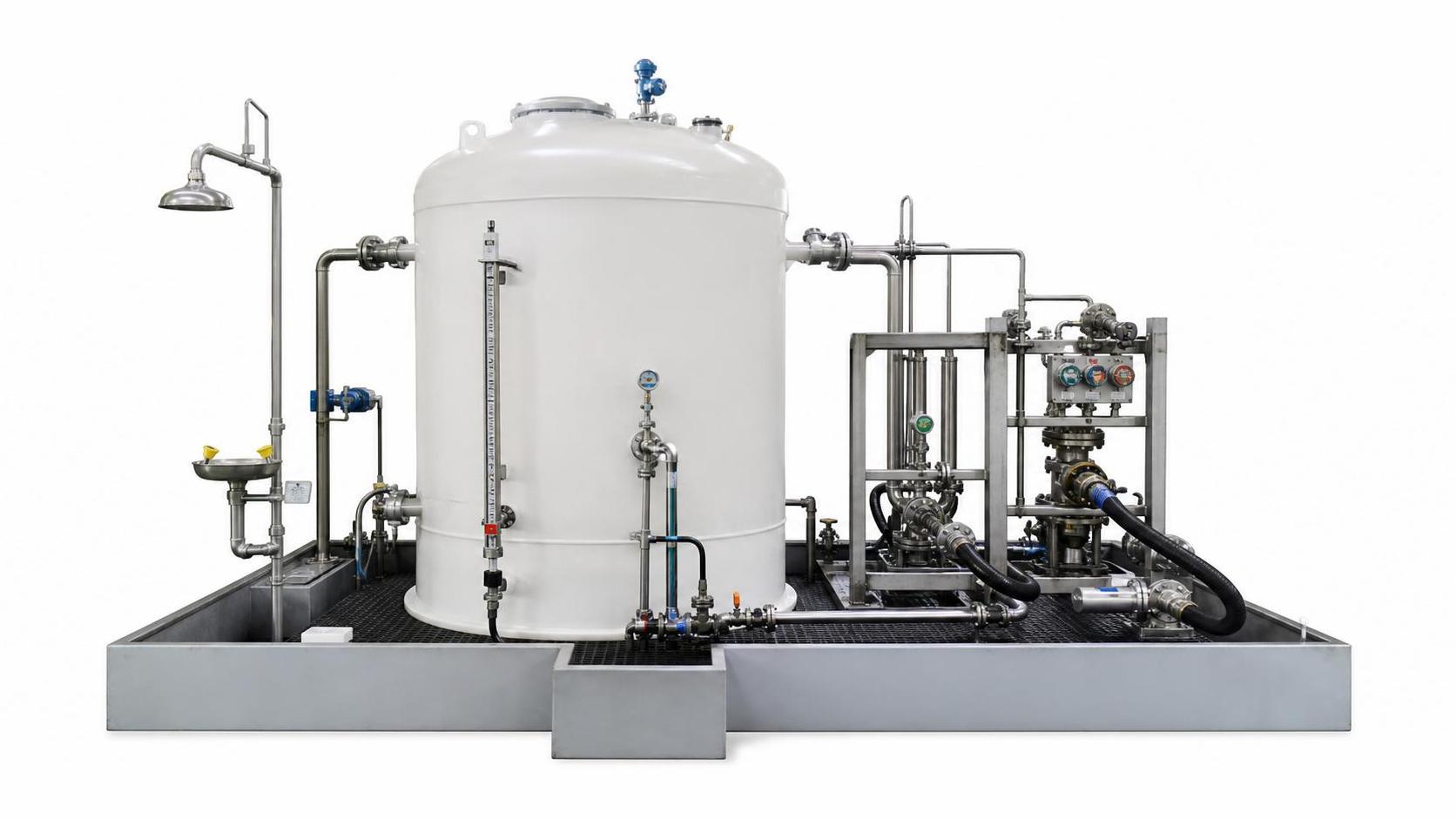
Why does Industrial Sodium Hydroxide require tighter control than many other bulk chemicals?
Industrial Sodium Hydroxide is widely used in chemical manufacturing, water treatment, pulp processing, and cleaning systems. Its value is clear, but so is its sensitivity to poor storage and handling.
A small deviation can create two problems at once. Product quality may drift, and workplace risk may rise faster than expected.
In practical terms, Industrial Sodium Hydroxide easily absorbs carbon dioxide from air, reacts with incompatible materials, and attacks unsuitable metals. That means quality control and safety control cannot be separated.
The main goal is not only to keep concentration within specification. It is also to prevent contamination, protect tanks and transfer lines, and avoid exposure during routine operations.
When facilities treat storage as a static step, issues often appear later during unloading, dilution, sampling, or downstream use. That is where disciplined control points matter most.
Which storage conditions protect product integrity best?
The preferred storage setup depends on concentration, climate, tank material, and transfer frequency. Even so, a few control principles apply almost everywhere.
Industrial Sodium Hydroxide should be stored in closed systems that limit contact with ambient air. This reduces carbonate formation and helps maintain chemical consistency over time.
Temperature also deserves attention. Concentrated caustic soda can crystallize in colder conditions, while higher temperatures may accelerate corrosion or stress certain seals and linings.
Common tank materials include carbon steel for suitable concentrations and temperatures, as well as specific plastics or lined systems for selected service conditions. Material choice should always match the actual operating range.
A practical storage review usually checks these points:
- Tank compatibility with concentration and temperature
- Vent design that limits moisture and carbon dioxide ingress
- Secondary containment sized for credible release scenarios
- Heat tracing or insulation where crystallization is possible
- Clear segregation from acids, ammonium salts, and reactive metals
More problems come from overlooked details than from tank size itself. Gaskets, level instruments, flexible hoses, and valve seats often become the weak link in an otherwise acceptable system.
What should be checked when receiving and transferring Industrial Sodium Hydroxide?
Receiving is one of the highest-risk moments. The chemical is moving, connections are exposed, and operator decisions directly affect both quality and safety.
Before unloading, confirm supplier documentation, concentration, batch identity, and container condition. This sounds routine, yet many contamination events begin with assumptions made at the gate.
Line verification is equally important. Wrong-line transfer remains a serious cause of incidents, especially where multiple corrosive liquids share a common unloading area.
During transfer, the focus shifts to flow control, hose integrity, pressure management, and splash prevention. Sampling should follow a defined method, not an improvised one.
The table below helps separate the most common checkpoints from the risks they are meant to control.
Where dilution is required, remember the basic rule: add caustic to water under controlled conditions. The heat released can be substantial, especially with concentrated Industrial Sodium Hydroxide.
How do quality and safety controls overlap in daily operation?
They overlap more than many procedures suggest. A tank that takes in carbon dioxide does not only create a quality problem. It may also generate solids that interfere with instruments or valves.
A poorly chosen pump seal is another example. It can introduce leaks, but it can also allow contamination or unplanned concentration change if water ingress occurs.
That is why routine control should combine laboratory checks with field observations. Concentration alone is not enough.
A balanced monitoring program for Industrial Sodium Hydroxide often includes:
- Concentration verification against receiving specification
- Appearance review for haze, solids, or discoloration
- Iron or other contamination checks where process sensitivity is high
- Inspection records for tank vents, valves, and transfer hoses
- Trend review of temperature, level, and abnormal maintenance events
In actual plants, trend data often gives the earliest warning. A gradual rise in transfer pressure or recurring valve stiffness may reveal carbonate buildup before laboratory deviation becomes obvious.
What mistakes cause the most incidents with Industrial Sodium Hydroxide?
The most damaging mistakes are usually familiar ones, repeated under time pressure. They are not dramatic design failures. They are ordinary shortcuts.
One common error is treating all caustic service materials as interchangeable. Compatibility depends on concentration, temperature, mechanical stress, and exposure duration.
Another frequent problem is poor segregation. Industrial Sodium Hydroxide stored too close to acids or connected through shared, poorly controlled lines creates a major escalation path during transfer errors.
Sampling is also underestimated. Open sampling points, improvised containers, and weak splash shielding can turn a simple check into an exposure event.
The following warning signs deserve immediate correction:
- White deposits near vents, nozzles, or sample points
- Repeated gasket replacement without root cause review
- Temporary hoses used beyond their intended service period
- Manual dilution steps without temperature control
- Missing or outdated emergency wash access checks
When these signs appear together, the issue is rarely isolated. It usually points to a weak control system rather than a single bad component.
How should facilities judge compliance and readiness, not just basic storage?
Compliance is broader than owning the right tank. It includes documented operating limits, inspection intervals, emergency response readiness, and evidence that procedures work during real tasks.
For Industrial Sodium Hydroxide, readiness can be judged through a short set of practical questions. Are concentration and temperature limits defined? Are incompatible chemicals physically separated? Are sampling and unloading steps observed and updated?
It also helps to test management controls against realistic scenarios. For example, can the site respond to a hose spray release, a crystallized line, or a misrouted delivery without relying on improvisation?
A useful review framework includes:
- Material compatibility matrix linked to actual concentrations
- Preventive maintenance for seals, vents, and level devices
- Documented transfer verification and permit steps
- Emergency drills focused on corrosive exposure and spill isolation
- Periodic audit of sampling, dilution, and housekeeping practices
The stronger approach is to connect quality records, maintenance history, and incident learning. That gives a more reliable picture than reviewing each system in isolation.
What is the most practical next step for improving control?
Start with the points where Industrial Sodium Hydroxide changes state, location, or exposure potential. Those moments usually carry the highest risk and the best improvement value.
A focused review often begins with storage vents, unloading connections, dilution methods, and sampling practice. These four areas reveal whether the site is controlling both product integrity and operator safety.
Then compare current practice against actual operating conditions, not nominal design assumptions. Concentration range, ambient temperature, cleaning frequency, and transfer volume all affect what good control really looks like.
Industrial Sodium Hydroxide can be handled reliably, but only when storage, transfer, inspection, and emergency readiness work as one system. That is the difference between nominal compliance and dependable control.
A sensible next move is to build a short site-specific checklist, verify material compatibility, and review the last few abnormal events for repeating patterns. That usually shows where action should start.
Navigation
- Industrial Sodium Hydroxide Storage and Handling: Key Quality and Safety Control Points
- Activated Charcoal Mistakes That Reduce Adsorption Performance
- Industrial Sodium Hydroxide Purity Grades and Common Uses
- Sodium Hydroxide Price Factors That Affect Bulk Purchasing
- Sodium Hydroxide Granules vs Flakes: Which Fits Your Process?
- Sodium Cyanide Handling Risks and Storage Best Practices
Contact Us