Welcome to Visit Dayue Import and Export Guangzhou Co., Ltd.

News
Dayue Import and Export Guangzhou Co., Ltd.
Activated Carbon vs Activated Charcoal: Key Industrial Differences
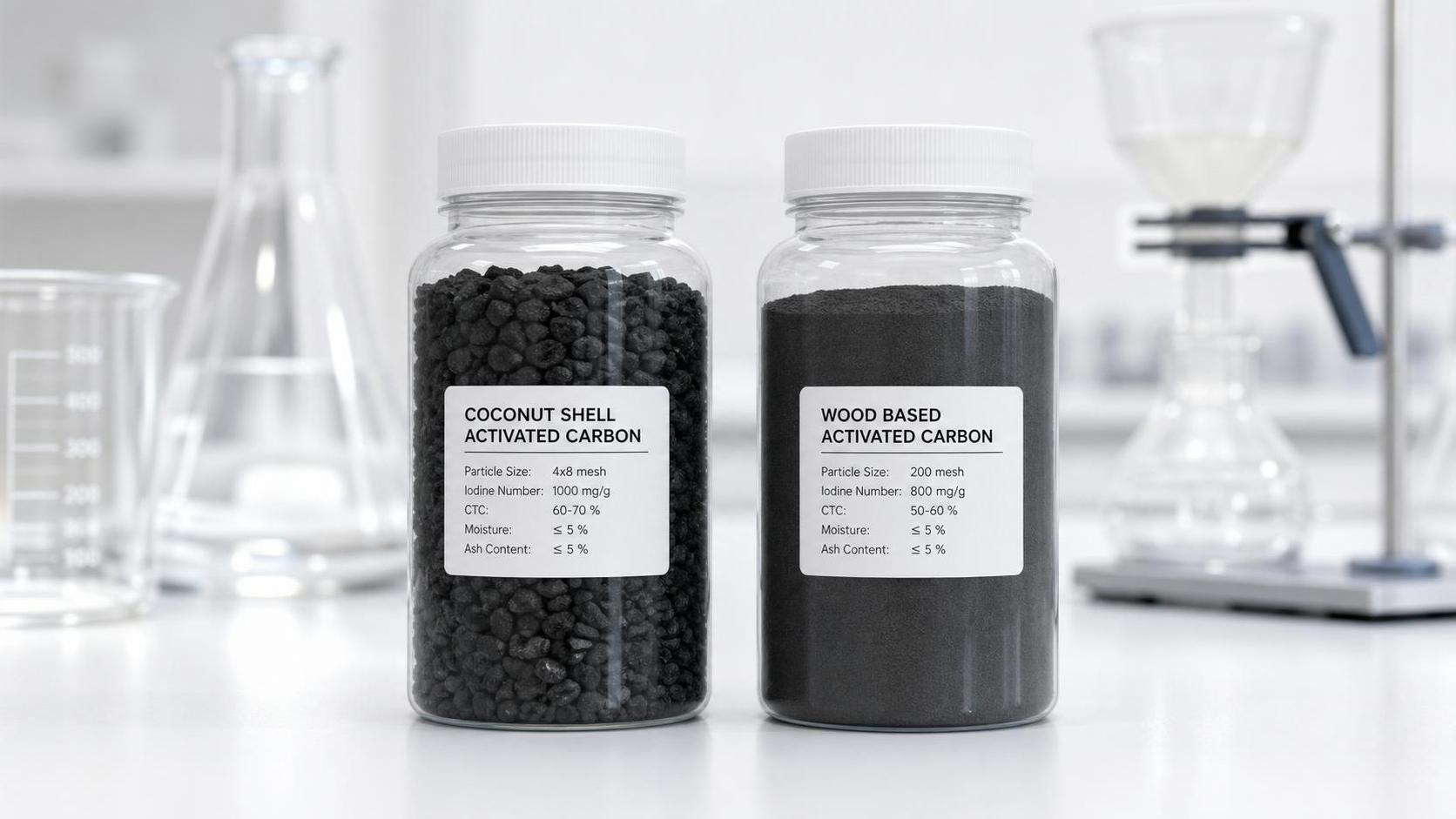
In industrial sourcing, the terms activated charcoal and Activated Carbon often appear side by side, as if they describe the same material. In practice, that assumption can create avoidable risk. For chemical processing, water treatment, air purification, and sensitive adsorption duties, the choice affects purity, consistency, regulatory fit, and operating cost. The distinction is not always about chemistry alone. It is also about how a material is manufactured, specified, tested, and matched to process conditions.
Why the terminology still causes confusion
Historically, “activated charcoal” was a common commercial term for carbonized materials with adsorption capacity. It remains widely used in consumer products, medical references, and some legacy supply chains.
Activated Carbon is now the more precise industrial term. It usually refers to engineered adsorbent materials produced under controlled activation conditions and supplied with measurable technical specifications.
That difference in language matters because industrial evaluation depends on data. A broad label may sound acceptable, yet still hide major variation in ash content, pore structure, hardness, or contaminant profile.
A practical definition of each material
Both materials are carbon-based adsorbents. Both rely on a porous structure that captures molecules from gases or liquids. The divergence appears in how consistently that structure is created and controlled.
Activated charcoal in common usage
Activated charcoal often refers to charred organic feedstocks, sometimes further activated, but not always described with strict industrial language. The term can cover a broad quality range.
In some markets, it may be perfectly functional. In others, it is simply not specific enough for process qualification.
Activated Carbon in industrial use
Activated Carbon usually identifies a material manufactured for adsorption performance. Feedstocks may include coconut shell, coal, wood, or synthetic sources, followed by steam or chemical activation.
The result is a product supplied in defined forms such as powdered, granular, pelletized, or extruded grades. Each form is designed for flow behavior, pressure drop, regeneration, or contact efficiency.
Production route shapes industrial performance
The strongest technical difference comes from manufacturing control. Activation is not a decorative step. It determines pore volume, pore size distribution, and adsorption selectivity.
Steam-activated grades often suit gas phase treatment and many liquid applications. Chemically activated grades may offer different pore structures and faster adsorption for larger organic molecules.
Feedstock also matters. Coconut shell Activated Carbon typically has high microporosity and strong hardness. Wood-based grades often provide more mesopores. Coal-based products often balance density and broad adsorption performance.
When activated charcoal is sourced without this level of production detail, it becomes harder to predict breakthrough time, regeneration behavior, or compatibility with chemical service conditions.
What evaluators usually compare
A reliable comparison should move beyond naming and focus on measurable properties. The table below captures the industrial differences that most often influence qualification.
Purity and compliance deserve closer attention
In chemicals-related applications, adsorption capacity is only one part of the decision. Purity can be equally important, especially when the carbon contacts process water, intermediates, solvents, food-adjacent streams, or pharmaceutical support systems.
Ash content may introduce unwanted minerals. Residual phosphorus or zinc from chemical activation may matter in some uses. Heavy metals can become a serious issue where downstream contamination limits are strict.
Activated Carbon supplied for industrial use is more likely to include technical documentation on these points. That does not guarantee suitability, but it creates a stronger basis for review and comparison.
Activated charcoal without complete supporting data may still work in low-risk service. It is less appropriate when audits, validation, or product contact standards are involved.
Not all adsorption ratings mean the same thing
A common mistake is to compare products using one headline number. Activated Carbon grades are often described by iodine number, molasses number, CTC activity, methylene blue value, surface area, or particle size.
Each indicator says something different. A high iodine number suggests strong micropore development. That can be useful for small molecules, but not always ideal for larger color bodies or complex organics.
For liquid decolorization, mesopore volume may matter more. For vapor-phase solvent recovery, bed density, ignition behavior, and pressure drop can become the deciding factors.
This is why the label activated charcoal tells too little on its own. Activated Carbon selection works best when the target contaminant and mass transfer conditions are clearly defined.
Where the distinction shows up in real applications
In wastewater treatment, Activated Carbon is often chosen for residual organics, color removal, odor control, and trace contaminant polishing. Predictable particle size and abrasion resistance help maintain filter integrity.
In air and gas treatment, pelletized Activated Carbon is widely used for VOC control, acid gas adsorption, and solvent recovery. Here, bed geometry and mechanical strength are difficult to ignore.
In chemical processing, powdered Activated Carbon may support purification of acids, intermediates, or specialty liquids where color reduction and trace impurity adsorption are required.
Activated charcoal may still be encountered in lower-spec filtration, laboratory supply channels, or applications where terminology has simply not caught up with current industrial practice.
Typical selection factors by use case
- Liquid purification needs pore structure matched to dissolved organic size.
- Gas treatment needs hardness, low dust, and pressure-drop stability.
- Regulated systems need traceability, contaminant data, and batch consistency.
- Thermal regeneration programs need carbon that survives repeated cycling.
Cost is not just the purchase price
A lower initial price can be misleading if adsorption life is short or fines generation is high. In many systems, replacement frequency, downtime, disposal cost, and product loss outweigh the unit price of the carbon itself.
Activated Carbon with tighter specifications often reduces process uncertainty. It may also simplify vendor comparison because the material can be benchmarked against clear test values.
That does not mean the highest-spec grade is always best. It means total operating cost should be judged against actual loading, contact time, and acceptable breakthrough limits.
How to evaluate a material before approval
A useful review starts with the contaminant profile, then narrows to form, pore structure, purity, and compliance needs. Naming alone should never drive qualification.
- Confirm feedstock and activation method.
- Request iodine, molasses, or application-relevant adsorption data.
- Check ash, moisture, pH, hardness, and particle distribution.
- Review heavy metals and residual chemical activator data when applicable.
- Compare performance using pilot tests or dynamic adsorption conditions.
- Assess regeneration, disposal, and handling requirements early.
This approach usually reveals whether a quoted activated charcoal is actually a suitable Activated Carbon grade, or simply a loosely described alternative.
A clearer way to frame the decision
For industrial work, the question is rarely which term sounds more familiar. The better question is whether the material is specified well enough to support process reliability.
Activated Carbon is generally the safer reference point because it points toward measurable properties, defined forms, and supplier accountability. Activated charcoal may describe a similar family of materials, but often with less precision.
Where performance, compliance, or downstream quality matter, the next step is to build a comparison sheet around application data rather than product naming. That makes supplier discussions more efficient and reduces the chance of approving a carbon that looks acceptable on paper but fails in service.
Navigation
- Industrial Sodium Hydroxide Storage and Handling: Key Quality and Safety Control Points
- Activated Charcoal Mistakes That Reduce Adsorption Performance
- Industrial Sodium Hydroxide Purity Grades and Common Uses
- Sodium Hydroxide Price Factors That Affect Bulk Purchasing
- Sodium Hydroxide Granules vs Flakes: Which Fits Your Process?
- Sodium Cyanide Handling Risks and Storage Best Practices
Contact Us