Welcome to Visit Dayue Import and Export Guangzhou Co., Ltd.

News
Dayue Import and Export Guangzhou Co., Ltd.
Industrial Activated Charcoal Selection Guide for Water Treatment
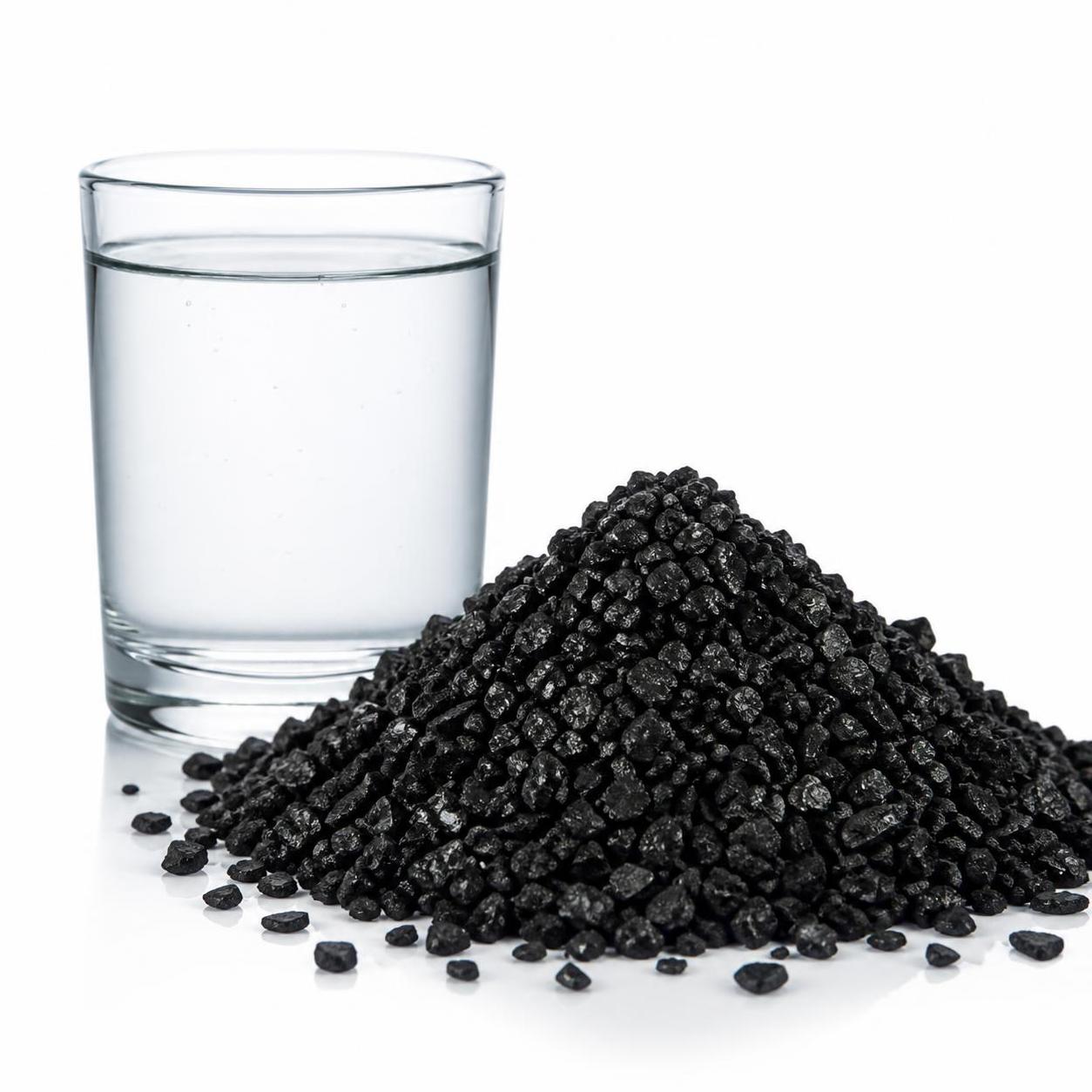
Selecting Industrial Activated Charcoal for water treatment is rarely a simple material choice. It affects effluent quality, filter life, operating stability, chemical compatibility, and the total cost of ownership across the entire treatment line.
In chemical processing and broader industrial utilities, water quality targets are becoming tighter while downtime tolerance keeps shrinking. That makes charcoal selection a project decision, not just a purchasing task.
A practical evaluation usually goes beyond headline adsorption numbers. Feed water composition, raw material source, particle size, hardness, regeneration options, and vessel design all shape whether Industrial Activated Charcoal performs well in real conditions.
Why the material matters in water treatment
Industrial Activated Charcoal is a porous carbon adsorbent used to remove dissolved organic compounds, residual oxidants, color, odor, and selected trace contaminants from water streams.
Its value comes from surface area and pore structure, but those two factors alone do not guarantee a good fit. The target contaminant must match the charcoal’s pore distribution and surface chemistry.
In practice, water treatment systems often deal with mixed loads. A stream may contain chlorine, solvents, natural organic matter, surfactants, or process byproducts at the same time.
That complexity is why standard grades do not always deliver standard results. A material that works well for dechlorination may not be the best choice for reducing COD, color, or volatile organics.
The first decision is not grade, but treatment objective
Before comparing suppliers, the treatment goal should be defined with precision. “Improve water quality” is too broad to support a reliable selection.
A better starting point is to identify what must be removed, what breakthrough point is acceptable, and how stable the inlet water remains over time.
Once the objective is clear, the technical discussion becomes more grounded. It is easier to compare test data, expected bed life, and replacement intervals in a meaningful way.
Raw material source changes performance
Industrial Activated Charcoal is commonly produced from coal, coconut shell, wood, or other carbon-rich feedstocks. Each source creates a different pore structure and mechanical profile.
Coal-based grades often offer a broad pore size distribution and good overall strength. They are widely used where mixed organic loads and durability are both important.
Coconut shell charcoal usually has a higher proportion of micropores. It can perform well for smaller molecules and is often selected when low ash content is a priority.
Wood-based grades tend to provide larger pore volumes. They may be useful when larger organic molecules, color compounds, or certain complex organics need better access to adsorption sites.
The key point is simple: feedstock is not a branding detail. It is a technical clue to how the material may behave under your specific water chemistry.
Particle size affects both kinetics and pressure drop
Many water treatment projects focus on adsorption capacity and overlook hydraulic behavior. That often leads to avoidable problems after commissioning.
Smaller particles provide faster adsorption because diffusion paths are shorter. This can improve removal efficiency, especially when contact time is limited.
At the same time, finer media usually creates higher pressure drop and may increase the risk of bed compaction or washout if the backwashing design is not appropriate.
Larger particles reduce hydraulic resistance, but mass transfer may be slower. In vessels with variable flow or short empty bed contact time, that trade-off becomes significant.
This is why Industrial Activated Charcoal should be selected alongside vessel dimensions, operating velocity, underdrain design, and cleaning strategy rather than in isolation.
A balanced media specification should include
- Effective size and uniformity suited to the vessel
- Hardness high enough for handling and backwash cycles
- Low dust and fines content before startup
- Bulk density matched to loading and expansion conditions
Adsorption data needs context
Supplier data sheets often highlight iodine number, methylene blue value, or surface area. These indicators are useful, but none of them directly predicts field performance by itself.
Iodine number is often treated as a shorthand for quality. In reality, it mainly reflects micropore adsorption potential and may not represent removal of larger molecules.
For process water and wastewater polishing, breakthrough testing under representative conditions usually gives better guidance than relying only on generic index values.
More useful questions include how quickly the media saturates, how performance changes with pH, and whether competing organics reduce effective capacity.
This matters especially in chemical plants where feed composition can shift with production cycles, cleaning campaigns, or upstream treatment changes.
Operational details often decide project success
Industrial Activated Charcoal may meet lab expectations and still disappoint in service if the surrounding system is poorly matched.
Contact time is one of the most important variables. If the empty bed contact time is too short, even a high-quality adsorbent may show early breakthrough.
Pre-filtration also deserves attention. Suspended solids can block pore access, raise pressure drop, and shorten useful media life before adsorption capacity is actually exhausted.
Temperature, oxidants, and biological activity can also affect results. For example, high oxidant exposure may change surface properties, while uncontrolled biomass growth may alter flow patterns inside the bed.
When reviewing options, it helps to assess the full operating envelope rather than the design point alone.
Common field issues to watch
- Early breakthrough caused by underestimating contaminant spikes
- Media loss during backwash because of poor particle sizing
- Unexpected ash contribution in high-purity water applications
- Channeling due to uneven loading or vessel internals
- Frequent replacement because regeneration was not evaluated early
Regeneration and lifecycle cost deserve early review
A lower purchase price does not always mean a lower project cost. Media replacement frequency, disposal handling, regeneration logistics, and production interruptions can outweigh the initial savings.
Some Industrial Activated Charcoal grades are better suited to thermal regeneration than others. Mechanical strength and contamination profile both influence whether regeneration remains economical.
In some water treatment systems, a regenerable option improves long-term cost control. In others, single-use replacement may be more predictable because contaminant loading is irregular or sensitive.
The right decision depends on service interval targets, waste handling rules, transport distance, and how critical uninterrupted operation is to the facility.
Where selection criteria change by application
Not every water treatment duty values the same performance profile. The selection logic should reflect the actual role of the carbon bed in the process.
For boiler feed pretreatment, low fines, stable pressure drop, and effective chlorine removal may be more important than maximizing broad-spectrum adsorption.
For industrial wastewater polishing, broader pore distribution and stronger tolerance to fluctuating organics may matter more than a single index number on a data sheet.
For reuse systems ahead of membranes, consistent filtrate quality and low leachable impurities often become decisive because downstream units are sensitive and expensive.
In each case, Industrial Activated Charcoal should be judged by the job it performs inside the wider treatment train.
A practical framework for comparing options
A useful comparison starts with water analysis, operating profile, and required outlet quality. After that, candidate media can be screened on fit rather than on price alone.
- Define target contaminants and acceptable breakthrough limits
- Review raw material source and expected pore distribution
- Check particle size against vessel hydraulics and backwash design
- Ask for ash, hardness, moisture, and fines data
- Evaluate pilot results or application references with similar water chemistry
- Compare replacement and regeneration scenarios over a full operating year
This approach reduces the chance of over-specifying a costly grade or under-specifying a media that creates instability later.
Moving from selection to confident implementation
Good decisions on Industrial Activated Charcoal come from linking chemistry, hydraulics, and operating reality. No single parameter can replace that combined view.
For upcoming projects, the most useful next step is to turn the treatment objective into a short technical checklist. Include contaminant profile, flow pattern, contact time, media constraints, and replacement strategy.
With that baseline, option reviews become more objective, pilot work becomes more targeted, and final media selection is easier to defend on both technical and commercial grounds.
In water treatment, Industrial Activated Charcoal performs best when it is chosen as part of the system, not after the system is already fixed.
Navigation
- Industrial Sodium Hydroxide Storage and Handling: Key Quality and Safety Control Points
- Activated Charcoal Mistakes That Reduce Adsorption Performance
- Industrial Sodium Hydroxide Purity Grades and Common Uses
- Sodium Hydroxide Price Factors That Affect Bulk Purchasing
- Sodium Hydroxide Granules vs Flakes: Which Fits Your Process?
- Sodium Cyanide Handling Risks and Storage Best Practices
Contact Us